Summer means long, sunny days, outdoor adventures, backyard get-togethers, and the height of training season. But as temperatures rise, intense summer heat has become more than a minor annoyance: it can sap your energy, interrupt your day, and make time outside feel draining. Common fixes—such as lightweight cotton tops, handheld fans, or chilled drinks—may bring brief comfort, but they do little to draw heat away from your body’s core.
A cooling vest is a wearable thermal-comfort garment designed to help manage body heat, even when temperatures climb above 90°F (32°C). Once used mainly by elite athletes, firefighters, and industrial workers, today’s versions are made in streamlined, lightweight styles for runners, hikers, commuters, gardeners, and other outdoor workers.

Whether you’re preparing for a summer race, working long hours outdoors, or hoping to enjoy a weekend outing without feeling overheated, a cooling vest can change how you approach warm-weather activities. Here’s a guide to how cooling vests work, their main benefits, the technologies available, and how to find one that suits your routine.
How Does a Cooling Vest Work?
To see why a cooling vest can do more than ordinary summer clothing, it helps to understand how the body handles heat. Your torso contains vital organs and major blood vessels, making it an important part of the body’s temperature-regulation system. When your core gets too hot, your heart works harder as your body sends blood toward the skin and produces sweat to release heat. In hot conditions, this can contribute to fatigue, fluid loss, and heat stress.
A cooling vest works on the torso by using conductive or evaporative heat transfer:
-
Direct core heat absorption: A cool surface or moisture-activated fabric rests against the chest, upper back, and sides, helping transfer heat away from the torso and supporting the body’s natural cooling process.
-
Cooled blood circulation: As blood flows through vessels near the cooled skin, it can help distribute a sense of coolness beyond the area covered by the vest, without limiting movement.
-
A lasting microclimate: Unlike a quick splash of water that soon warms or evaporates, a well-designed vest can provide a more consistent cooling sensation around the upper body for an extended period. How long it lasts depends on the vest technology and conditions.
6 Reasons a Cooling Vest Belongs in Your Summer Routine
Adding a cooling vest to your summer gear can make outdoor activities more comfortable and support your ability to stay active in warm weather.
1. Manage Heat Fatigue and Stay Comfortable
Heat discomfort can build during everyday activities—not only during hard workouts, but also while gardening, walking the dog, commuting, or attending outdoor events. A cooling vest can help you feel more comfortable and focused when the temperature rises, especially when you combine it with breaks, shade, and adequate fluids.
2. Make Outdoor Workouts More Comfortable
Hot, humid conditions can make runners, cyclists, and other outdoor athletes feel they need to slow down or shorten a session. Wearing a cooling vest before, during, or after exercise may offer added comfort and help you manage your training in summer conditions. Adjust your effort to the weather and take breaks as needed.

3. Stay Comfortable During Outdoor Work and Chores
Landscapers, construction crews, delivery drivers, event staff, and weekend gardeners may not always be able to step indoors when the weather heats up. A lightweight cooling vest offers wearable cooling support without needing an outlet or bulky equipment, helping make time outside more manageable.
4. Support Your Body’s Cooling Efforts
Sweating is one of the ways your body cools itself, and prolonged sweating can mean losing fluids. A cooling vest provides an additional source of cooling comfort, though it does not replace drinking fluids or taking other precautions in hot weather.
5. Enjoy Outings, Travel, and Festivals in Comfort
Summer trips, theme parks, camping, and outdoor concerts can involve long stretches of walking or standing in the sun. Many modern cooling vests have low-profile, athletic designs that pair easily with everyday outdoor clothing, making them a practical layer for extended outings.
6. Add Comfort in Warm Weather
Some people are more sensitive to heat or prefer extra cooling support during outdoor activities. A cooling vest may offer another way to stay comfortable when temperatures climb, while warm-weather plans should still include shade, rest, and other suitable precautions.

Understanding the 4 Types of Cooling Vests
Cooling vests use different methods to create a cooling effect. The right choice depends on factors such as your local climate, whether it is dry or humid, your activity level, and how long you want cooling support to last.
| Cooling Vest Type |
How It Works |
Best Climate |
Cooling Duration |
Key Advantage |
| Evaporative Cooling Vests |
Soaked in water; cools via natural evaporation as air flows over the fabric |
Dry to moderately humid climates with airflow |
2 – 5 hours per soak |
Ultra-lightweight, zero freezer needed, easy to reactivate anywhere |
| Phase Change Material (PCM) Vests |
Uses specialized gel/wax packs that freeze at a comfortable 58°F–65°F (14°C–18°C) |
All climates, including high humidity and under protective gear |
2 – 4 hours per pack set |
Dry to the touch; maintains a safe, constant temperature without ice burn |
| Ice Pack Cooling Vests |
Holds frozen gel or water inserts in insulated interior pockets |
Extreme heat and high-intensity work environments |
2 – 3 hours |
Maximum, immediate cooling power for intense heat loads |
| Active Circulation / Battery Vests |
Uses a compact battery pump to circulate chilled water through micro-tubing |
Long, continuous shifts or stationary outdoor work |
4 – 8+ hours (with ice refills) |
Adjustable flow control and continuous on-demand cooling |
1. Evaporative Cooling Vests
Evaporative vests are made with highly absorbent polymer fabrics or PVA (polyvinyl alcohol) textiles. Soak the vest in cool water for one to two minutes, gently squeeze out extra water, and put it on. As air moves across the fabric, moisture evaporates and carries heat away from your skin.
-
Ideal for: Runners, cyclists, hikers, and commuters in dry climates seeking lightweight freedom of movement without added bulk.
2. Phase Change Material (PCM) Cooling Vests
Phase change vests contain bio-based or paraffin-derived cooling packs designed to solidify at moderate temperatures, usually around 58°F to 65°F (14°C to 18°C). Since they freeze above water’s freezing point, they provide consistent cooling without irritating the skin or leaving condensation behind. PCM packs can also be recharged in a refrigerator, ice water cooler, or standard freezer in under 45 minutes.
3. Ice Pack Cooling Vests
Classic ice pack vests have pockets positioned across the chest and upper back to hold flexible frozen gel packs. Insulated inner layers help prevent direct contact with frost while providing fast, powerful heat relief.
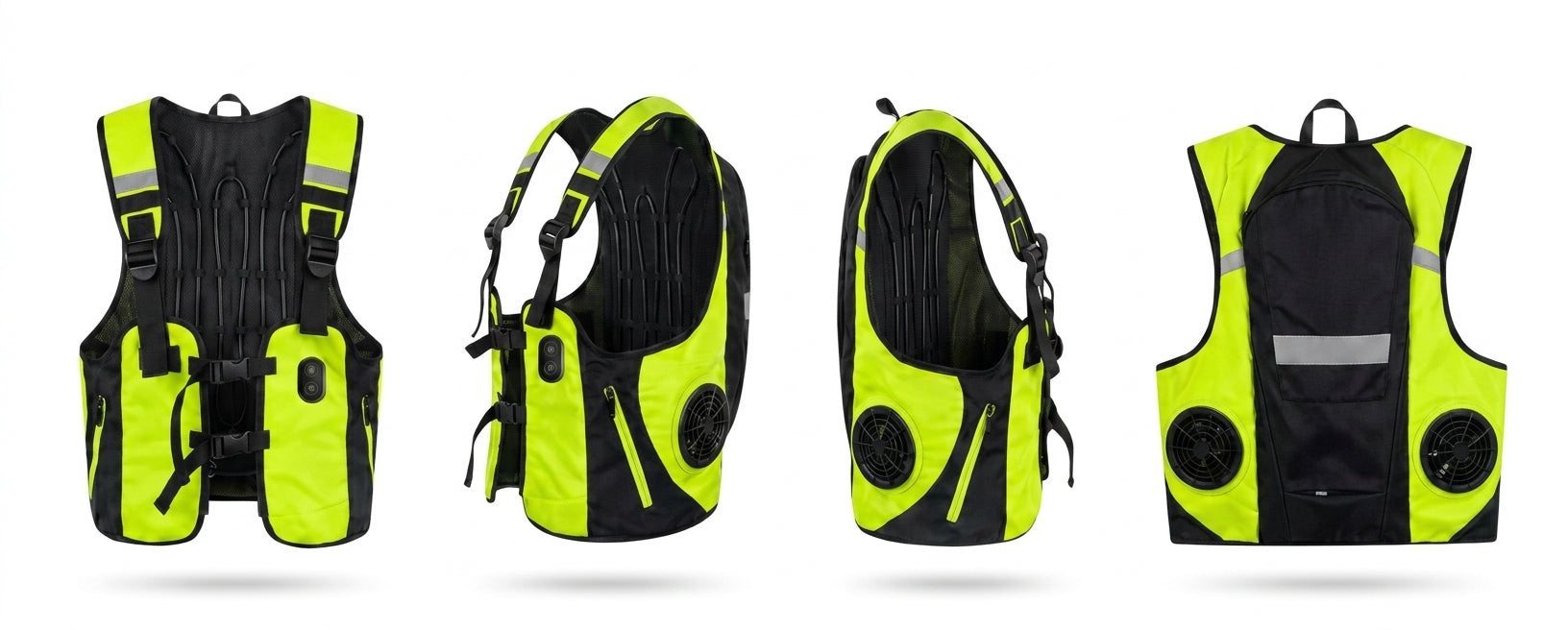
4. Battery-Powered Water Circulation Vests
For precise temperature control, active liquid-cooling vests move chilled water from a compact insulated reservoir through soft capillary tubes built into the lining. A rechargeable USB battery powers the system, allowing you to turn cooling on or off and adjust it at the press of a button.
6 Key Features to Look For When Buying a Cooling Vest
Before choosing a cooling vest, consider the design features that distinguish a comfortable, effective option from one that feels bulky or restrictive:
-
Snug, Ergonomic Fit
Heat transfer is most effective when the vest rests close to your torso without leaving gaps. Adjustable side straps, elastic panels, or dual zippers can help tailor the fit over a T-shirt or athletic base layer while preserving shoulder movement.
-
Breathable, Moisture-Wicking Outer Fabrics
Even a cooling vest can feel hot if its shell traps body heat. Look for lightweight mesh, ventilated ripstop nylon, or soft moisture-wicking polyester blends that let heat and humidity escape.
-
Balanced Weight Distribution
A well-made cooling vest should not strain your neck or shoulders. Choose a design that spreads cooling packs across the chest and upper back, with a total weight typically between 1.5 and 4 pounds so it remains comfortable in motion.
-
Quick Recharge and Easy Reactivation
Consider where you will wear the vest. For hiking or travel without freezer access, an evaporative style that reactivates with tap water is convenient. If you can use a cooler or refrigerator, consider removable, interchangeable inserts that are quick to swap.
-
Dry-Touch Comfort (No Wet Shirts)
For errands, outdoor dining, or work, seek water-repellent inner barriers in evaporative vests or sealed PCM packs to help keep your clothes dry.
-
Machine-Washable Durability
Summer gear can collect sweat, sunscreen, and dust. Choose a vest with removable cooling inserts and reinforced stitching that can be machine-washed or rinsed by hand between uses.
How to Get the Most Out of Your Cooling Vest: Pro Tips
Use these simple practices to improve cooling performance and help your gear last longer:
-
Wear a Thin, Moisture-Wicking Base Layer: A lightweight synthetic or merino athletic shirt can help spread the cooling sensation across your torso while shielding sensitive skin from direct cold contact.
-
Pre-Cool Before Stepping Outside: Put on your vest 10 to 15 minutes before entering the heat. Starting cool may be more comfortable than waiting until you already feel overheated.
-
Keep Spare Packs in a Cooler: For all-day outings with a PCM or ice-pack vest, carry an extra set of inserts in a small insulated cooler bag so you can change packs as needed.
-
Air-Dry Completely Before Storage: After using or washing an evaporative vest, hang it in a ventilated spot away from direct sunlight until fully dry to help keep the fabric fresh and odor-free.
Upgrade Your Summer Comfort Today
Hot weather doesn’t have to put your outdoor hobbies, fitness plans, or daily routine on hold. A cooling vest can help you stay comfortable and keep moving during the warmest months. Choose the style that suits you, from the lightweight convenience of evaporative fabric to the dry-touch feel of phase change packs or adjustable, battery-powered circulation.
Ready to stay more comfortable in the heat? Explore our collection of lightweight, high-performance cooling vests designed for everyday wear and outdoor performance.