Ever found yourself at your desk in a bulky winter coat, clasping cold hands around a barely warm cup of tea while the thermostat insists it’s 68°F (20°C)? That’s the familiar discomfort of a chilly office. Commercial buildings can be hard to heat consistently: drafts settle in corner offices, HVAC systems circulate air across open-plan spaces, and disagreements over the thermostat can leave anyone who feels the cold shivering through afternoon meetings.
For years, the go-to fix for a cold desk has been an under-desk space heater. But using one can bring its own headaches, from tripped breakers and stale, dry air to workplace safety restrictions.
A heated shawl offers a wearable, cordless, and polished alternative for personal warmth. It directs far-infrared heat to your shoulders, upper back, and neck. A rechargeable heated shawl can address many of the drawbacks of conventional desk heaters while making the workday more comfortable. Here’s why switching could be a practical upgrade to your office routine.
![]()

Key Takeaways: Heated Shawl vs. Space Heater at a Glance
-
Fewer Facility Restrictions: Many offices and coworking spaces restrict space heaters because of fire risks and their high power draw. Wearable heated shawls use low-voltage USB power banks, though it’s still wise to check your workplace’s policies.
-
Warmth Where You Need It: Rather than heating the unused space beneath your desk, a heated shawl delivers warmth directly around your shoulders and upper back, where cold-related tension can build.
-
Lower Energy Use: A typical space heater uses about 1,500 watts, while a heated shawl may use roughly 10 watts. Actual consumption varies by model and settings, but wearable heating generally uses much less power.
-
Easy to Take Along: Unlike a heater that stays beside your desk, a cordless heated shawl can go with you to a meeting room, break area, or on a chilly commute.
The Hidden Downsides of Traditional Office Space Heaters
To understand the appeal of wearable warmth, it helps to look at why under-desk heaters can cause difficulties in shared workplaces.
1. Office Restrictions and Fire Risks
Ask a facilities manager about common winter concerns, and space heaters may come up quickly. Ceramic and coil models can become very hot and draw substantial electrical power. A 1,500W heater connected to an office power strip may overload a circuit, potentially interrupting power to nearby equipment. For fire-safety and insurance reasons, some commercial buildings prohibit personal heaters, so check your building’s rules before bringing one in.
2. Uneven Warmth: Hot Feet, Cold Shoulders
Since warm air rises, a heater beneath your desk tends to warm your ankles and shins first, while your shoulders, neck, and hands may remain cold. Turning it up can leave your legs uncomfortably warm without easing tension in your upper back.
3. Dry Air, Noise, and Distractions
Fan-forced heaters circulate warm air around your workspace, which may contribute to dry-feeling skin, eye discomfort, or static. Even quieter models can produce a steady mechanical hum that distracts from focused work or is picked up by a sensitive microphone during video calls.

7 Reasons a Heated Shawl Is a Workplace Essential
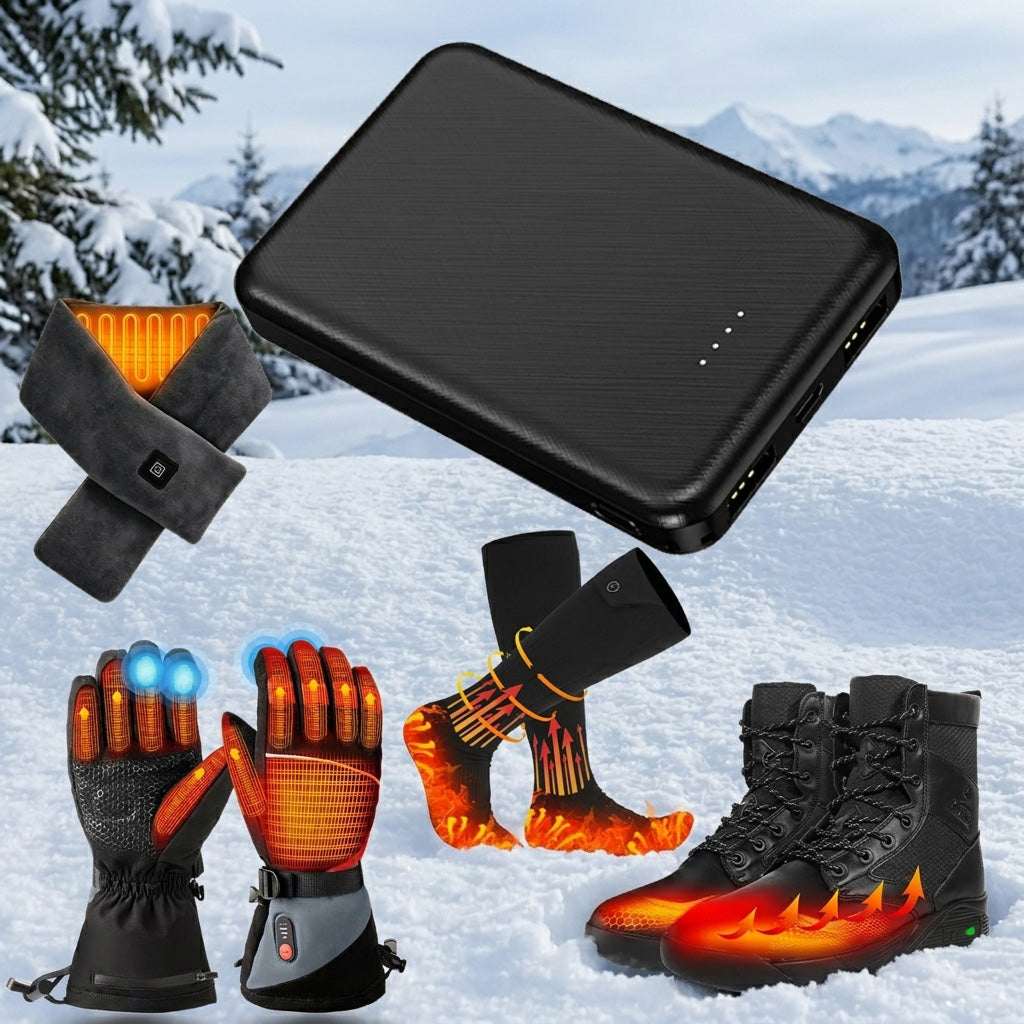
A thoughtfully designed heated shawl—including cordless options from Firoth—offers a different way to stay warm: direct heat paired with gentle far-infrared warmth. Rather than trying to warm an entire room, it creates a personal pocket of comfort around you.
1. Targeted Comfort for Neck and Shoulder Tension
After hours in a chilly office, it’s easy to curl forward to hold in warmth. Your shoulders may rise toward your ears, leaving your neck and upper back feeling stiff by mid-afternoon.
A heated shawl rests over your shoulders and upper back, bringing its thin carbon-fiber or graphene heating elements close to areas where tension often builds. Turn it on and the warmth can help you feel more relaxed and comfortable as you work.
2. Freedom to Move from Desk to Meeting Room
A space heater keeps its warmth in one spot beneath your desk. When you head to a cold meeting room, go out for lunch, or step out for coffee, that warmth stays behind.
With a compact rechargeable battery pack, a cordless heated shawl goes wherever you do. Wear it open as a polished layer for a presentation, fasten it while typing, or wrap it around yourself on a cold commute.
3. Quiet Comfort That Looks at Home on Video Calls
When hybrid work means one video meeting after another, looking professional matters. A bulky coat can feel out of place on camera, while a fan-powered heater may add unwanted background noise.
Many heated shawls use refined fabrics, from soft fleece and cashmere-feel knits to sleek quilted finishes, so they look like a considered part of your outfit. With no fan or moving parts, they provide warmth quietly and keep you camera-ready.
4. Adjustable Warmth for Shifting Office Temperatures
Office temperatures can change throughout the day. Mornings may feel cold before the building warms up, while afternoon sunshine can make a room more comfortable.
Unlike a basic space heater that blows hot air until you turn it off, many heated shawls offer three heat settings—often Low, Medium, and High—with temperatures around 104°F (40°C) to 131°F (55°C). A tap on the built-in LED control lets you choose lighter warmth or a higher setting when the air conditioning feels too strong.
5. Lower-Power Personal Warmth
If energy use is on your mind, or you want to limit electricity use in your home office, a heated shawl can be an alternative to warming the whole space. A standard space heater may use 1,500 watts, while a rechargeable heated shawl may use around 10 watts.
At those stated power levels, using a shawl for an eight-hour workday would consume less electricity than running a space heater for four minutes. With a standard 5V/2A USB battery pack, it can provide warmth for hours on a charge without heating the entire room.
6. Thoughtful Low-Voltage Safety Features
Modern heated apparel is designed with layers of low-voltage protection. Its heating elements use 5V direct current, similar to a phone charger, rather than high-voltage power or exposed hot coils.
Some heated shawls also include NTC temperature sensors and automatic overheat shut-off. These features are designed to help control heat and keep the fabric within a comfortable range, including when you’re sitting back in your office chair.
7. Simple Care for Everyday Use
Space heaters can collect dust in their vents and may give off a dusty smell when switched on after being stored. A heated shawl is made to be worn and cared for like a garment.
Before washing, disconnect and remove the battery pack from its inner pocket. Then place the shawl in a laundry bag and follow its care instructions, using a gentle machine-wash cycle if permitted, to keep it fresh through the season.
Heated Shawl vs. Under-Desk Space Heater: A Side-by-Side Comparison
| Feature |
Rechargeable Heated Shawl |
Under-Desk Space Heater |
| Office Policy Compliance |
100% Allowed (Low-voltage wearable) |
Often Banned (Fire & circuit overload risk) |
| Power Consumption |
~10W (Ultra-low energy draw) |
1,500W (High energy draw) |
| Where You Feel Warmth |
Shoulders, upper back, neck, and core |
Ankles and lower legs only |
| Portability |
Fully cordless; moves from desk to meetings |
Stationary; tethered to a wall outlet |
| Noise Level |
Completely silent (0 dB) |
Audible fan hum (40–55 dB) |
| Air Quality Impact |
Zero effect on room humidity |
Dries out skin, eyes, and nasal passages |
| Style & Appearance |
Chic wardrobe layer; looks great on Zoom |
Bulky floor appliance |
| Maintenance |
Machine-washable (with battery removed) |
Dust buildup inside heating vents |
How to Wear a Heated Shawl at the Office Without Adding Bulk
A common misconception about heated apparel is that it looks too sporty or technical. Modern heated shawls are made to fit naturally into business-casual and professional outfits. Try these three easy ways to wear one at work:
-
The Classic Draped Wrap (Ideal for Desk Work): Drape the shawl evenly over both shoulders, positioning the heating area across your upper back and neck. Fasten the front snaps or buttons to keep it in place as you type, while leaving your arms free.
-
The Belted Blazer Style (Ideal for Meetings): Wear a neutral-colored heated shawl, such as charcoal, camel, or black, over a fitted turtleneck or blouse. Add a slim leather belt at the waist for a neat, tailored shape reminiscent of a designer poncho.
-
The Lap Blanket Option (Ideal for Cold Legs): If your legs feel chilly during long hours at your desk, open the shawl and spread it over your lap. It offers heated-blanket comfort without taking up space in your drawer with a bulky throw.
Features to Consider in an Office Heated Shawl
If you’re thinking of replacing your space heater and making your workstation more comfortable, consider these four key features when choosing a heated shawl:
-
Broad, Evenly Distributed Heating: Choose a shawl that warms the upper back and neck area rather than concentrating heat in one small central spot. Flexible carbon-fiber or graphene panels can warm up within 30 seconds and move comfortably with the fabric.
-
A Lightweight Battery Pack: A compact 5,000mAh to 10,000mAh power bank can offer a useful balance, delivering 4 to 8 hours of warmth while staying light enough to carry in a pocket without feeling cumbersome.
-
A Reliable Front Closure: Snaps, magnetic clasps, or a streamlined zipper help keep the shawl on your shoulders when you reach for your mouse or get up from your chair.
-
Soft, Breathable Lining: Pick an interior fabric that feels comfortable against bare skin or a lightweight blouse and helps hold in warmth without making you feel overheated.
Are heated shawls safe to wear all day at a desk?
Yes. Well-made heated shawls use low-voltage 5V batteries and built-in temperature sensors to help prevent overheating. For comfortable warmth, many people begin on High for about 15 minutes, then change to Low or Medium to maintain warmth throughout the day.
Can you wash a heated shawl?
Yes. First disconnect and take the rechargeable battery pack out of its concealed pocket, then close the pocket. Wash the shawl on a gentle, cold cycle, preferably in a mesh laundry bag. Air-dry it flat or hanging until fully dry before reconnecting the battery.
How long does the battery last on a heated shawl?
Runtime varies with battery capacity and the chosen heat setting. Many rechargeable heated shawls provide 3 to 4 hours on High, 5 to 6 hours on Medium, and up to 8+ hours on Low, which may be enough for a full workday.
Will a heated shawl interfere with office electronics or pacemakers?
Typical heated shawls use low-voltage direct-current (DC) heating elements and are not expected to disrupt computers or phones. If you have a pacemaker or another implanted medical device, check with your physician before using a wearable heating product.
Make Your Desk More Comfortable This Season
You shouldn’t have to sit through a chilly workday or risk a stern note from building management by using an under-desk heater. A rechargeable heated shawl offers quiet, energy-conscious, comforting warmth exactly where you need it, helping you stay focused, at ease, and productive from your first email of the morning to your last call of the day.
Ready to leave office chills behind? Discover lightweight heated wraps and wearable warmth essentials designed for the workplace at Firoth.com, and make working through winter more comfortable.